When we talk about maximizing solar panel efficiency and minimizing impact on the surrounding environment, the conversation often turns to coatings—specifically anti-glare and anti-reflective coatings. While these terms are sometimes used interchangeably, they serve very different purposes.
Let’s break down what they are, how they work, and when they matter most.
Anti-Reflective Coating (ARC): For More Light, Less Loss
Anti-reflective coatings are all about performance. They’re applied to the surface of solar cells (usually silicon) to reduce the amount of sunlight that bounces off. Normally, uncoated silicon reflects more than 30% of incident light, meaning wasted energy. But with an ARC, reflection drops to around 4%, allowing more light to enter the cell and boost output.
How it works:
These coatings use thin-film interference—often a layer of silicon nitride or titanium dioxide—to trap incoming light, bend it, and push more of it into the cell. Almost all high-efficiency solar modules today, including every panel in Eco Green Energy’s portfolio, come with ARC built-in.
Where it’s used:
Everywhere. ARC is a standard in modern solar manufacturing, used in residential, commercial, and utility-scale installations.
🧊 Anti-Glare Coating (AG): For Safer, Less Reflective Surfaces
Now, while ARC optimizes performance, anti-glare coating focuses on safety and visibility.
Glare is a directional reflection—a concentrated beam of light that can cause visual discomfort or even safety hazards, especially in sensitive areas like airports, highways, or urban rooftops. Anti-glare coatings are designed to diffuse reflected light, spreading it across multiple angles so it’s less intense and disruptive.
How it works:
Instead of a thin film, AG coating is often achieved through micro-texturing of the glass surface or by applying a diffusive film. This gives the module a matte finish. The light is still reflected, but in a softer, scattered way.
Where it’s used:
Anti-glare coating is especially useful in:
- Airports and aviation zones
- Highway-side installations
- Residential rooftops in densely populated areas
- Public parks and commercial buildings with visual exposure
How to Tell the Difference?
Visual Inspection:
- Anti-reflective: Panels appear shiny but deep blue or dark purple due to thin-film interference.
- Anti-glare: Panels look matte or satin, with visibly reduced shine.
Technical Sheet Markings:
- Look for “AR Coating” (standard) or “AG Coated” / “Glare Control Certified” in datasheets or compliance documents.
Testing:
AG panels often come with third-party glare analysis reports, especially when used in regulated zones.
Why These Coatings Matter
Coatings aren’t just surface-level. They impact everything from efficiency and aesthetics to compliance and safety. Choosing the right one isn’t just about squeezing more watts—it’s about installing responsibly, especially in environments where glare could interfere with daily life or safety operations.
Introducing Eco Green Energy’s Anti-Glare Coated Series
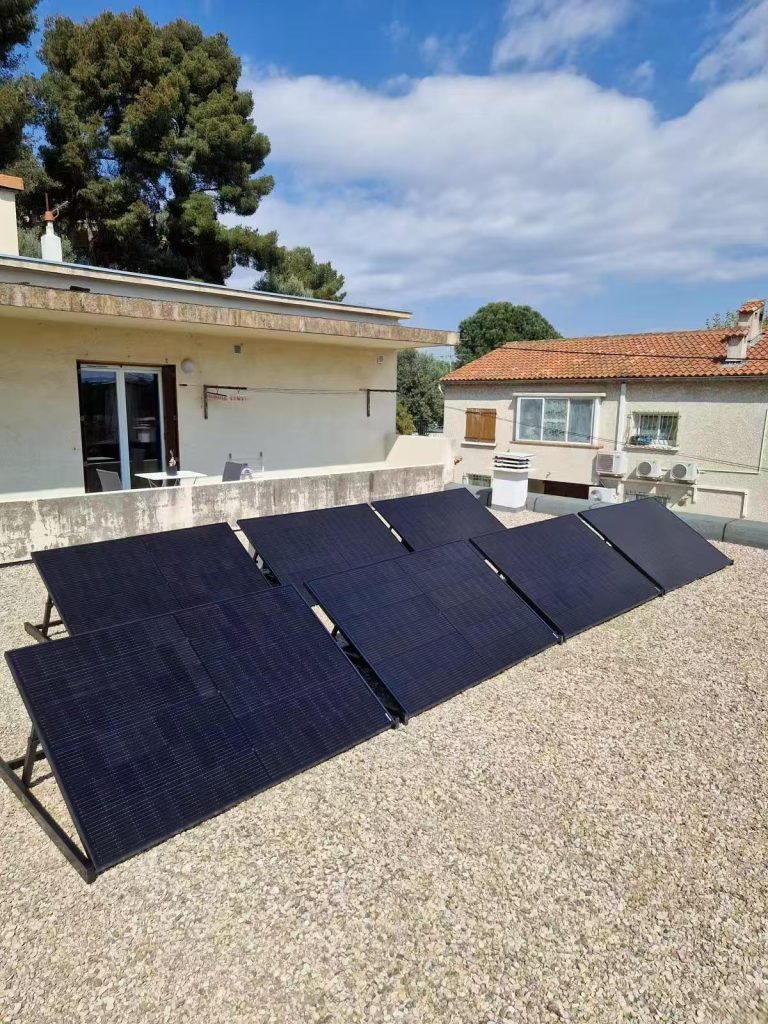
At Eco Green Energy, every module is manufactured with industry-standard anti-reflective coating to maximize performance. But for special applications, we now offer a dedicated anti-glare coated series—ideal for glare-sensitive zones like airports, rooftops, and water-based floating PV systems.
This coating maintains energy output while keeping reflected light under control. It’s already being deployed in residential areas in France, most recently with our project in Provence-Alpes-Côte d’Azur
Azur.
🧭 Final Thought
Understanding the difference between anti-glare and anti-reflective coatings helps solar professionals and developers make smarter, site-specific decisions. Whether it’s about extracting every photon or protecting flight paths and sightlines, the right coating helps solar shine safely—and more efficiently.