
Your BESS Project Shouldn’t Be a Risk
Across Europe, Latin America, and emerging markets, more EPCs are entering energy storage. The opportunity is clear. Battery Energy Storage Systems (BESS) unlock new revenue streams, improve self-consumption, and stabilize solar product
Companies go through a lot of effort in shortlisting companies they work with on such products or projects. Some criteria include: bankability, Tier1 proof, years in the industry, technical data and more.
After the selection process, comes BESS commissioning, production, installation.
And then? Presumably your BESS should already start performing well and you should expect your ROI soon.
In many projects however, even if the equipment is correctly installed and the hardware is reliable, energy is lost. Expected savings do not materialize. And the return on investment (ROI) is delayed.
The reason is simple: commissioning and EMS configuration define performance.
Where BESS Projects Can Go Wrong
From field experience across multiple markets, the same issues tend to repeat.
1. EMS Configuration Is Treated as a Default Setting
Many systems are commissioned with generic EMS parameters. This is one of the most common mistakes.
Yet every site is different:
- Load profiles vary significantly
- Solar production is not stable
- Grid constraints differ by region
If the EMS is not adapted:
- Batteries may charge at the wrong time
- Peak shaving becomes ineffective
- Unnecessary energy export of curtailment
Optimizing energy storage operation can improve system value by 20–30%, depending on application and market conditions.
In other words, you achieve ROI through control and execution.
2. BESS Commissioning Stops Too Early
In many projects, commissioning stops with:
- System starts
- No alarms
- Confirming only basic functionalities
But this is not enough.
A system can be “working” and still:
- Miss peak shaving opportunities
- Cycle inefficiently
- Deliver lower-than-expected savings
Proper commissioning should include:
- Observation over real operating conditions
- Adjustment of charge/discharge logic
- Validation against expected use cases
Without this step, performance gaps remain hidden.
3. No Alignment Between Design and Reality
What is on paper rarely matches 100% of real conditions.
On-site differences often include:
- Unpredictable load variations
- Different operating schedules
- Grid instability or limitations
If there is no integration of the above into EMS logic, the system will operate suboptimally.
Case Insight: From Installation to Performance
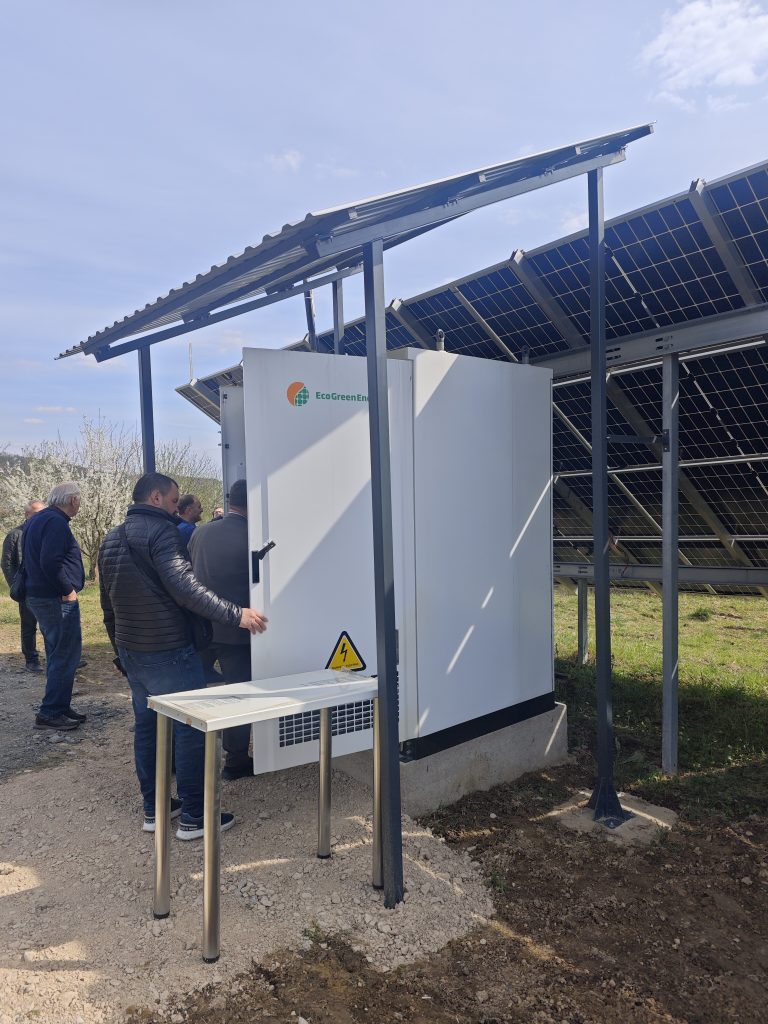
Recently, our team supported an EPC partner in Bosnie-Herzégovine on their first solar + BESS installation (261kWh / 125kW).
The system was installed correctly. However, during commissioning, the EPC encountered challenges with EMS configuration.
Instead of waiting for issues to escalate, we intervened immediately.
Step 1: Remote Support
First, we provided live video assistance:
- Identification of EMS configuration gaps
- Adjustment of initial parameters
- Guidance to stabilize system behavior
This ensured the project could progress without delay.
Step 2: On-Site BESS Commissioning
Then, our team visited the site, including:
- Sales manager (native speaker of the local language)
- R&D director and head engineer — directly from our R&D in France.
On-site, we focused on three priorities:
1. Full System Verification
We checked all components, connections, and operating conditions to ensure consistency with design expectations.
2. EMS Optimization
We adapted the EMS strategy to real site conditions:
- Load profile
- Solar production variability
- Grid constraints
This step is critical. A generic configuration rarely delivers optimal results.
3. Training and Knowledge Transfer
We provided technical training & a live workshop for:
- The client team
- Their end client
We also shared practical tutorials, ensuring they can operate and adjust the system independently.

The Result: Performance From Day One
Thanks to this structured approach, the system delivered immediate results:
- The BESS was fully operational from day one
- No energy losses were observed at startup
- The client gained confidence in managing future projects
- Revenue generation started immediately
This is what effective commissioning looks like.
The Real Differentiation in Today’s Market
Suppliers vs Partners.
In today’s competitive landscape of renewable energy, hardware and pricing can vary, while large international companies receive more pressure on quantity rather than quality.
Strong brand names don’t guarantee strong products or strong after-sales and ongoing support.
What EPCs Should Check Before Calling a Project “Done”
To avoid common performance gaps, a few key questions can be used as a checklist:
- Is the EMS adapted to the real load profile?
- Has the system been tested under actual operating conditions?
- Are charge/discharge strategies aligned with business goals (self-consumption, peak shaving, backup)?
- Can the EPC team confidently adjust parameters if needed?
If the answer to any of these is unclear, the system is not fully optimized yet.
From Product to Performance
At Eco Green Energy, our approach is simple.
We do not stop at delivery.
We support:
- System design validation
- EMS configuration
- Commissioning
- On-site optimization
- Training and long-term follow-up
This ensures that each project reaches its expected performance.
Because ultimately, ROI is not theoretical. It is operational.
Meet Us at Our Upcoming Events
This project reflects the approach we bring to every partnership.
You can meet our team and discuss your projects at:
- Canton Fair (China) — April 15-19, Booth 17.2F 44-45
- Proyecta Solar (Chile) — May 12-13, Stand S4
- ExpoSun (Ecuador) — May 6-7, Booth B1
- Intersolar Europe (Germany) — A2.435
Whether you are planning your BESS project or scaling your portfolio, we are ready to support you from installation to performance.
Conclusion
Energy storage is a powerful tool. But its value depends entirely on how it is used.
A well-installed system is only the beginning.
A well-commissioned system delivers results.
For anyone entering this market or deciding to expand more, the right partner makes the difference between uncertainty and confidence.
Feel free to subscribe our LinkedIn Newsletter for more insights, industry news and updates from Eco Green Energy and reach out through email: info@eco-greenenergy.com


