How to balance cost optimization, resilience, and process stability in cold-chain energy systems
Cold-chain facilities are among the most energy-intensive industrial applications. From cold rooms and blast freezers to processing lines and refrigerated logistics, operations depend on continuous, high-quality power.
That makes them a strong fit for solar PV + Battery Energy Storage Systems (BESS), and in many cases, UPS or hybrid architectures.
How do you design energy systems that reduce costs while ensuring uninterrupted operation for critical loads?
At Eco Green Energy, we increasingly see solar PV and Battery Energy Storage Systems (BESS) deployed together to address exactly this need.
Cold-Chain Load Characteristics
Cold-chain sites differ from typical commercial loads in several important ways:
- 24/7 base load driven by refrigeration
- High starting currents (compressors, chillers)
- Strict temperature stability requirements
- Sensitivity to voltage dips and short interruptions
- Peak demand charges in many markets
The optimal design must combine:
- resilience logic (critical-load backup + fast response
- economic logic (self-consumption, peak shaving)
System Architecture: PV + BESS + Hybrid Integration
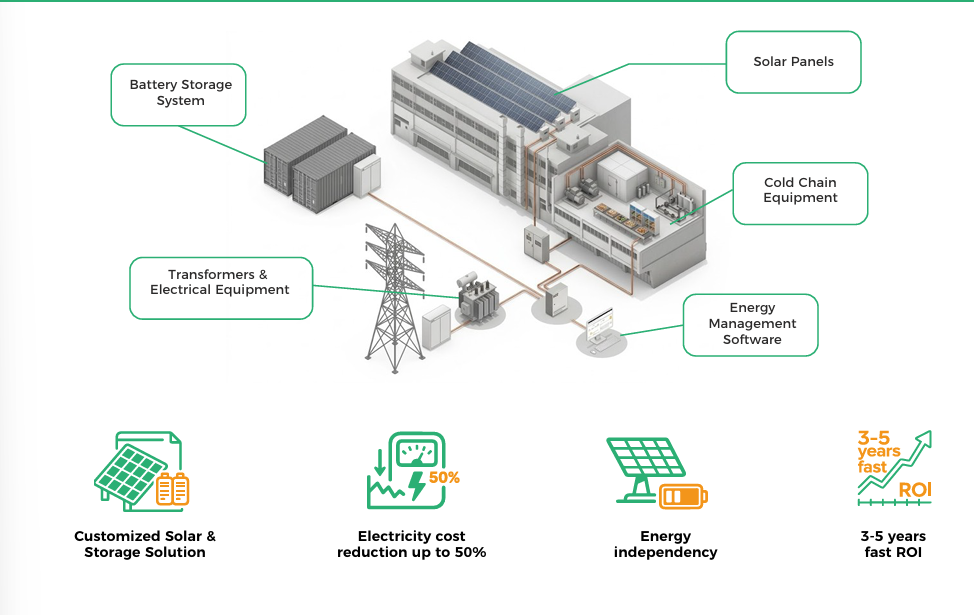
A typical cold-chain energy system combines:
- Solar PV for daytime generation
- BESS (battery + PCS) for storage and dispatch
- EMS (Energy Management System) for optimization
- Optional diesel generator integration (hybrid systems)
How It Works:
- PV supplies daytime load and reduces grid import
- Excess PV is stored in the battery
- BESS discharges during:
- peak tariff periods
- demand spikes
- grid outages
- EMS controls energy flow automatically based on load profile and priorities
UPS / Hybrid Layer (Site Dependent)
- millisecond ride-through for sensitive loads
- clean transfer for control systems and IT
- coordinated operation with diesel generators (if present)
The objective is not full off-grid operation, but cost optimization + operational resilience.
Where the ROI Comes From in Solar & Storage for Cold Chain
In cold-chain applications, value is typically created through a combination of the following:
1. Demand Charge Management / Peak Shaving
Cold stores often face high demand charges due to coincident peaks.
BESS can cap grid import during peak events such as:
- blast freezing cycles
- loading operations
- ambient-driven cooling spikes
Design notes:
- validate billing window (15/30/60 min)
- check DNO constraints on import limiting
- align EMS with refrigeration control logic to avoid compressor instability
2. High Self-Consumption + Load Shifting
Refrigeration provides strong daytime demand, making PV highly effective.
Design notes:
- evaluate roof vs ground vs carport potential
- consider seasonal alignment (summer cooling demand vs PV production)
3. Critical-Load Backup (Product Protection)
Full-site backup is rarely required. Instead:
-> define a critical bus, typically including:
- selected cold rooms/freezers
- controls and SCADA
- monitoring systems
- IT infrastructure
Design notes:
- map compressor start-up currents and sequencing
- model thermal inertia for acceptable outage duration
- ensure monitoring systems remain active
4. Power Quality & Nuisance Trip Reduction
Voltage dips and short interruptions can trigger cascading failures.
Design notes:
- assess need for UPS-grade ride-through (PLC, SCADA, comms)
- coordinate VFD settings with EMS / microgrid controller
5. Hybridization with Generators
Where diesel backup exists, BESS enables:
- smoother transient response
- reduced genset step loading
- optimized fuel consumption
- improved system stability
EGE Case Study: Cold-Chain Processing Facility in Togo
A fish processing plant faced:
- unstable grid conditions
- limited production capacity
- inconsistent output quality
In collaboration with Ocean Treasure Foods, Eco Green Energy implemented:
- solar PV + BESS hybrid system
- custom-developed industrial freezer
Results (within < 3 months):
- +20% increase in sales
- improved production stability
- higher throughput and product consistency
Our own engineer flew from France to conduct an on-site feasibility study to realize the system design based on the exact client needs.
Key takeaway:
Energy design directly impacts production performance—not just cost.
Typical Architectures We See
Depending on site constraints and process sensitivity:
- Grid-tied PV + AC-coupled BESS (cost + backup on critical bus)
- PV + BESS + genset hybrid microgrid
- UPS (power quality) + BESS (energy autonomy) split architecture
-> Architecture is driven primarily by:
- tolerance to interruption
- refrigeration restart behavior
What We Need to Pre-Engineer a Project
For companies looking to evaluate a project realistically, useful inputs include:
- temperature requirements and outage tolerance
- 12 months of electricity bills (tariff + demand structure)
- single-line diagram and transformer data
- refrigeration equipment list (compressors, VFDs, controls)
- peak demand data (interval preferred)
- existing generator specs and ATS/STS configuration
Key Value Drivers
From an engineering and commercial perspective, value is typically created through:
1. Peak shaving
Reducing demand charges by discharging batteries during peak load periods.
2. Load shifting
Using stored energy during high tariff periods or when PV is unavailable.
3. Backup and resilience
Maintaining operation of critical systems during outages.
4. Power quality stabilization
Mitigating voltage dips and transient disturbances that can affect compressors.
5. Hybrid optimization
Reducing diesel runtime while improving response time and system efficiency.
Integration with Existing Infrastructure
Most projects are designed as grid-connected hybrid systems, integrating:
- Utility grid
- Diesel generators (if present)
- Existing electrical infrastructure
This allows:
- flexible operation modes
- phased implementation
- optimization based on site constraints
Implementation Considerations for EPCs
When designing cold-chain energy systems, key factors include:
- Load profile (24h curve, peak demand, startup loads)
- Critical vs non-critical load separation
- Required backup duration
- Tariff structure (demand charges, TOU pricing)
- Grid stability and outage frequency
- Available installation space (roof/ground)
Proper system design ensures both:
👉 economic viability
👉 operational reliability
Complexity vs Operability
Despite system sophistication, modern solutions are designed for:
- automated operation via EMS
- minimal operator intervention
- remote monitoring and diagnostics
From the end-user perspective, interaction is typically limited to:
- dashboards
- alerts
- performance tracking
Conclusion
Cold-chain applications represent a high-impact use case for solar and BESS integration.
When properly designed, these systems deliver:
- cost reduction
- operational resilience
- improved power quality
- scalable infrastructure for growth
More importantly, they enable cold-chain operators to move from energy dependence to energy control.
Book a Technical Discussion or Meeting
If you are working on cold-chain or industrial energy projects, we can prepare a first-pass concept.
Send us a message through the contact page or email us at: info@eco-greenenergy.com
Include:
- your company and role
- project type (cold storage / processing / logistics)
- location
- priority (cost reduction / backup / hybrid / full optimization)
We will schedule a short session and provide an initial technical direction
Conclusion
Cold-chain facilities represent one of the most compelling use cases for solar + BESS integration.
When properly designed, these systems deliver:
- measurable cost savings
- improved power quality
- operational resilience
- scalable infrastructure for growth
At EGE we focus on working directly with our client to offer the best solution and ensure 100% perfect operation of the project, from beginning (design) to end (after-sales).
Feel free to subscribe our LinkedIn Newsletter for more insights, industry news and updates from Eco Green Energy and reach out through email: info@eco-greenenergy.com