
The agricultural industry faces unique challenges—rising energy costs, water shortages, and the pressure to reduce carbon footprints. Enter agrivoltaics, a system that combines solar energy generation with farming on the same land.
When paired with Battery Energy Storage Systems (BESS), it becomes a powerful tool for maximizing productivity and sustainability. Let’s explore how these technologies work together and why they could transform farming operations.
What is Agrivoltaics?
Agrivoltaics involves installing solar panels above crops, grazing fields, or water systems, creating a dual-use system. The panels generate electricity while also providing shade, reducing evaporation, and protecting crops from extreme weather. This synergy allows farmers to make better use of their land without sacrificing agricultural output.
For instance, a study by the Fraunhofer Institute in Germany found that crops like lettuce, potatoes, and wheat grown under solar panels retained up to 40% more moisture, leading to higher yields in dry climates. It’s a win-win for farmers and the environment.
For a deeper diver on the topic of agrivoltaics, you can read our previous article focusing on the agrivoltaic trend in Italy and how Italy is utilizing solar energy generated by PV systems to improve their crop yield.
How Does BESS Complement Agrivoltaics?
Adding a Battery Energy Storage System (BESS) to an agrivoltaic system amplifies its benefits. Solar panels generate energy during the day, but not all of it is used immediately. BESS stores excess energy and makes it available when the sun isn’t shining—during the night or cloudy periods.
This combination allows farmers to:
- Power Irrigation Systems 24/7
With stored energy, irrigation pumps can operate even after sunset, ensuring consistent water supply for crops. - Run Refrigeration Systems for Produce
Perishable goods like fruits and vegetables require cooling. BESS ensures refrigeration systems stay operational even during power outages. - Reduce Energy Costs
Farmers can store cheap solar energy during the day and use it during peak-price periods, avoiding expensive electricity bills. - Achieve Energy Independence
For farms in remote areas, agrivoltaics with BESS eliminates the need for costly diesel generators or unreliable grid connections.
How Does This Benefit Farmers?
1. Increased Crop Yields
Agrivoltaics provides shade, reducing heat stress on plants. Crops like tomatoes, spinach, and berries thrive under partial sunlight. Studies show that lettuce grown under solar panels can achieve yields comparable to those in open fields while conserving water.
2. Enhanced Land Productivity
Dual-use land maximizes revenue. While crops grow below, the panels above generate electricity that can power farm operations or be sold back to the grid.
3. Long-Term Savings
Installing a PV + BESS system requires upfront investment, but the savings are significant. For example, a 1 MW system produces 1,400,000 kWh per year. At an average price of €0.10/kWh, that’s €140,000 in annual energy savings. Over 20 years, this translates to millions in cost reductions.
4. Sustainability and Market Advantage
As consumers demand eco-friendly products, farms powered by renewable energy have a competitive edge. Agrivoltaics helps reduce CO2 emissions, making produce more appealing to environmentally conscious buyers.
Real-Life Examples of Agrivoltaics + BESS
- France: In Tresserre, vineyards use dynamic agrivoltaic systems to optimize both grape growth and solar energy production. Stored energy powers machinery and reduces grid dependence.
- East Africa: In Kenya, small-scale agrivoltaic projects use solar energy to power irrigation systems for water-intensive crops like maize and vegetables. With the addition of BESS, these systems provide power for night irrigation, reducing reliance on diesel pumps and saving operational costs.
- Eastern Europe: Agrivoltaics is gaining traction in countries like Poland, where farmland is being repurposed for dual-use systems. BESS ensures uninterrupted power for agricultural machinery and refrigeration during harsh winters or grid fluctuations.
Why Agrivoltaics + BESS is the Future
- Resilience Against Climate Change:
Agrivoltaics provides shade and protection from extreme weather, while BESS ensures energy availability during blackouts or grid disruptions. - Revenue Diversification:
Farmers can sell excess solar energy back to the grid, creating an additional income stream. - Scalable for All Farm Sizes:
Whether you’re running a small family farm or a large agricultural operation, these systems can be tailored to fit your needs.
Floating PV: A Growing Opportunity
For farms with water bodies like reservoirs or fish ponds, floating solar (FPV) offers an innovative alternative. Moreover, aquaculture is a sector that really can benefit by floating PV systems. By installing panels on water surfaces, farmers can:
- Reduce evaporation, conserving precious water.
- Generate solar power while freeing up land for crops.
- Combine FPV with BESS to supply steady power for irrigation and aquaculture systems.
Example: Norway has implemented a 290 kW floater for salmon-farming specialist Bjoroya and a 160 kW installation for a cod fish farm.
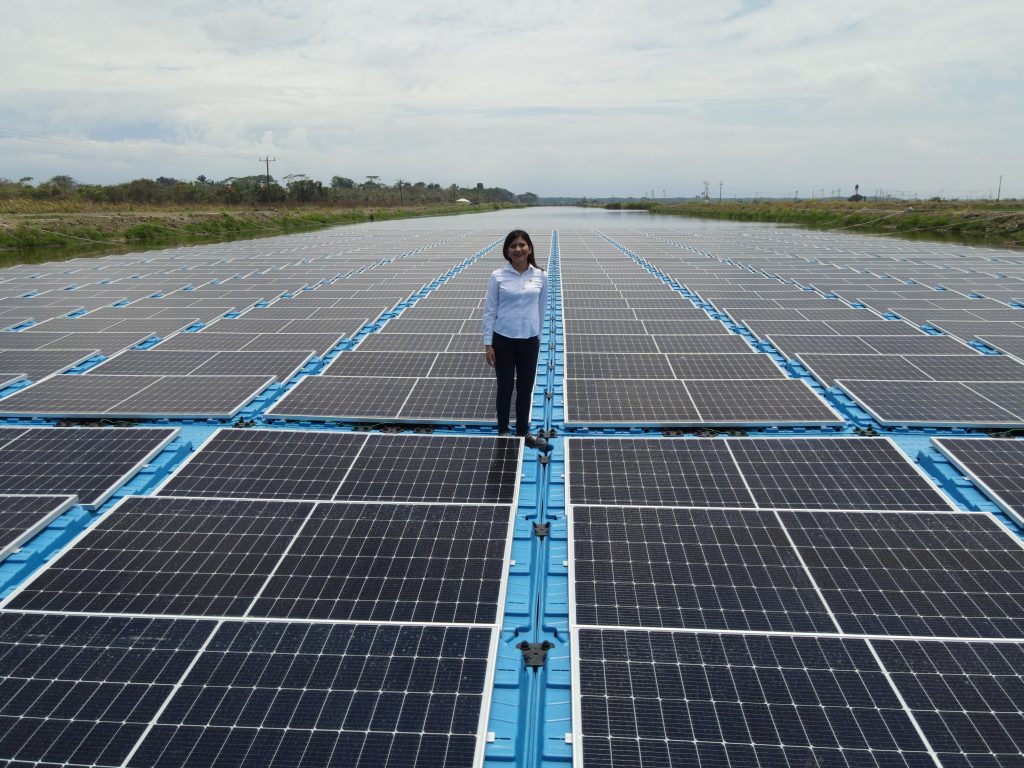
Our example: In Ecuador, floating solar installations on shrimp farms can provide a needed solution for the booming shrimp farming sector and the land availability. It helps improve water management and boost productivity. Closed aquaculture systems especially, need constand oxygen supply to move water into and through the system, and to purify it, with the use of pumps and aerators
Ecuador’s First Floating PV
Eco Green Energy is very proud to have supplied Ecuador’s first floating PV system for a shrimp farm!
What We Offer
At Eco Green Energy, we provide end-to-end solutions for agrivoltaics, BESS, and FPV systems, including:
- Custom Design and Installation:
We carry out engineering studies and site survesy to offer consultations for tailored systems that optimize solar generation and crop productivity. - High-Quality Components:
Durable solar panels and advanced battery storage systems designed to last for decades. - Expert Consultation:
We help you calculate savings, ROI, and system size to ensure your investment delivers maximum value. - After-Sales Support:
From maintenance to upgrades, we’re here to keep your system running smoothly.
Conclusion: The Time to Act is Now
High-efficiency PV Modules combined with BESS is a power combo, offering solutions to the pressing challengesdifferent industries are facing today.
Contact us today to learn how we can help you at info@eco-greenenergy.com
If you are intersted to explore more opportunities for combining PV and Battery Energy Storage Systems in different industries, our series of articles is analyzing how the Mining and Hospitality Industries are benefiting from this power combination.


